



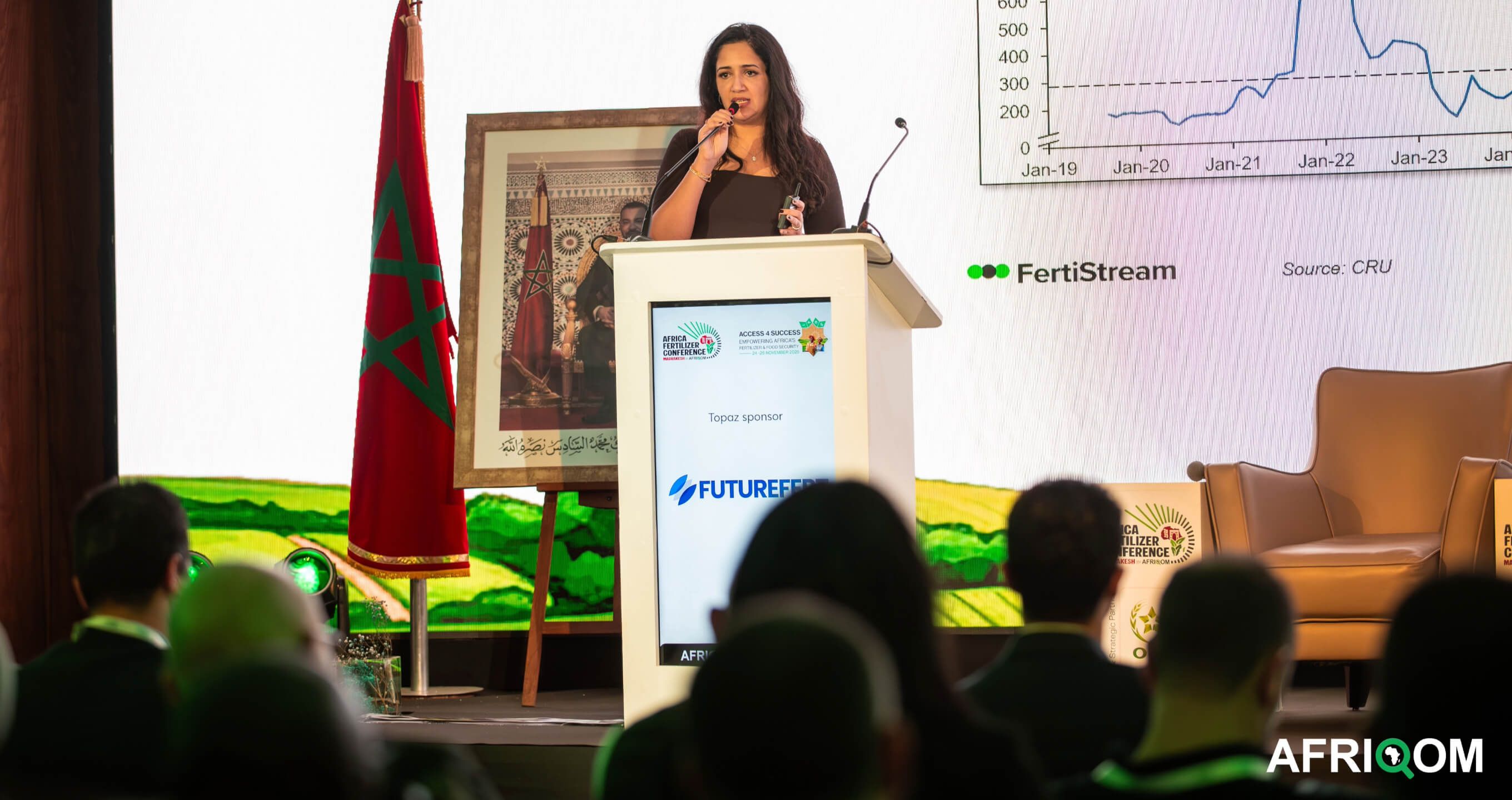

The AFRIQOM 2025 Conference, held from 24 to 26 November 2025 in Marrakesh, Morocco is one of the most important events for the region’s fertilizer sector. The event serves as a key platform for major stakeholders to connect, exchange market insights, and contribute to the development of the industry. For the second year in a row, FertiStream is participating as a partner, taking the opportunity to engage with both existing clients and potential partners.
FertiStream’s Head of Business Development MEA, Imane Belrhiti highlighted few trends on the African fertilizer market:
• Global influence: The year 2025 was rich in policies that have impacted the market, for example, duties in the US and Chinese export policies. The general geopolitical environment in the Middle East was extremely unstable and put pressure on prices, especially nitrogen. While other geographies are more resilient in the face of price increases (ex. subsidy support in India and higher willingness to pay in Europe and Brazil), African demand struggled to follow the prices uptrend and was impacted by changes in supply and prices.
• Short-Term Outlook: Imane shared a 30–90-day price forecast, noting that urea is expected to remain stable. Phosphate prices, especially in Brazil, may soften due to weak MAP and DAP demand, while high sulfur costs could limit declines. Granular MOP is expected to remain steady following a new contract with China.
• Price Trends Across Africa: Fertilizer demand across Africa in 2025 shows both diversity and regional dynamics when compared with 2024, and overall demand was impacted.
Urea demand in West Africa dropped in 2025 vs 2024 due to price volatility. Nitrogen products were the most impacted by prices within the mix of the three nutrients.
South Africa experienced a decline in nitrogen imports as well. Meanwhile, potash and ammonium sulfate imports remained stable, reflecting steady demand.
Ethiopia, as an example of an East African country, maintained strong fertilizer import. This stability was supported by government policies, centralized procurement programs, and efforts to ensure that farmers have adequate fertilizer for their crops.

